
Smart Socks vs Smartwatch: What a Wrist Device Cannot Measure
Key takeaways
- No. Wrist wearables measure skin temperature at the wrist, which does not reflect localised inflammation in the foot. Foot ulcer risk is assessed by comparing temperature between matching sites on the two feet.
- No. Pressure distribution across the sole requires sensors at the sole. A wrist device infers activity from acceleration, not from force at the ground.
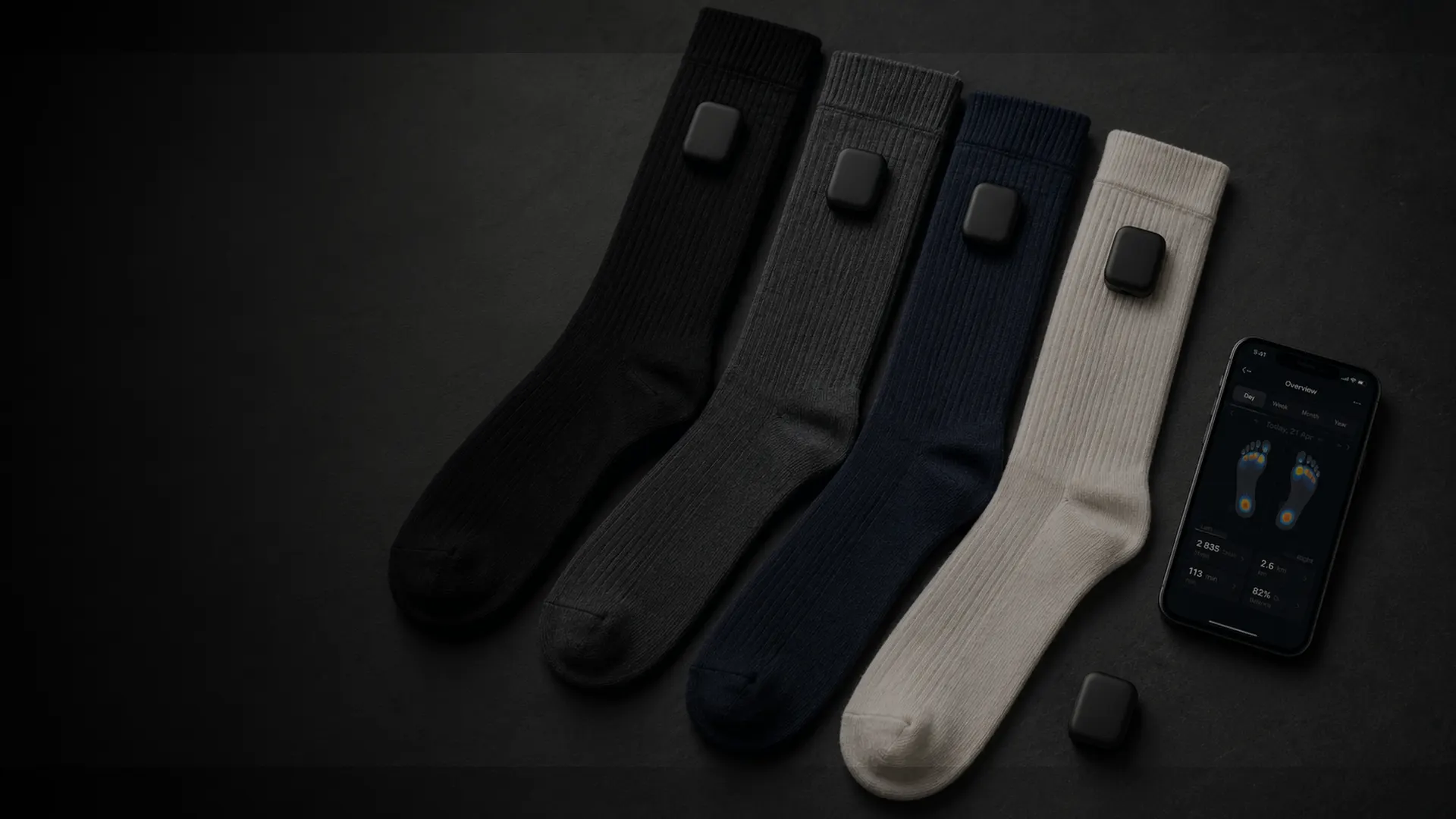
- They measure different things. A watch is good for cardiovascular load and general activity. A sensing sock is good for foot-level temperature, pressure and gait. Neither replaces the other.
Different sensors, different questions
A smartwatch is an outstanding instrument for the questions it was built to answer: heart rate, heart rate variability, cardiovascular training load, sleep, steps, and general movement. It is worn on the wrist because that is a convenient place to measure pulse and acceleration.
The wrist is, however, roughly a metre away from the tissue that fails in most foot problems. That distance matters more than it sounds.
What the wrist genuinely cannot see
Foot temperature asymmetry
The clinically validated signal for diabetic foot ulcer risk is a temperature difference between matching sites on the left and right foot. A single wrist sensor cannot produce this measurement, because it has no access to either foot, and skin temperature at the wrist does not track localised inflammation in the sole.
Pressure distribution
Pressure is force divided by area, and it is the variable that drives tissue breakdown in the diabetic foot and overload injury in the athletic one. Measuring it requires sensors between the foot and the ground. Acceleration at the wrist is not a substitute; it tells you that you moved, not how the force landed.
Foot-level gait and symmetry
A watch can estimate cadence and, on some models, rough running dynamics. It cannot tell you which foot spent longer on the ground, where in the stance phase the load peaked, or whether the two sides are diverging over the course of a run.
The comparison, plainly
| Signal | Wrist wearable | Sensing sock |
|---|---|---|
| Heart rate / HRV | Yes | No |
| Sleep staging | Yes | No |
| Step count | Yes | Yes |
| Foot temperature (left vs right) | No | Yes |
| Plantar pressure distribution | No | Yes |
| Foot-level gait symmetry | Limited | Yes |
| Load at the point of contact | No | Yes |
The wear-time problem
There is a second, less technical difference. Watches get taken off — to charge, to shower, to sleep, or because someone simply does not like wearing one. Socks are already part of getting dressed. For a monitoring task that only works if it happens every day, the friction of the device matters as much as its sensors.
Use the right instrument for the question
If your question is "how hard did I train and how well did I recover", a watch may answer it well. If your question concerns temperature or pressure at a specific area of the foot, a sensor at the foot is the more direct measurement location. Mi Terro is designed for that second layer, not to replace the first.
Frequently asked questions
Can a smartwatch measure foot temperature?
No. Wrist wearables measure skin temperature at the wrist, which does not reflect localised inflammation in the foot. Foot ulcer risk is assessed by comparing temperature between matching sites on the two feet.
Can a smartwatch measure foot pressure?
No. Pressure distribution across the sole requires sensors at the sole. A wrist device infers activity from acceleration, not from force at the ground.
Do I need both?
They measure different things. A watch is good for cardiovascular load and general activity. A sensing sock is good for foot-level temperature, pressure and gait. Neither replaces the other.
Sources and further reading
- Review of Smart Electronic TextilesMaterials, construction, ambulatory sensing, and remaining challenges.
- Review of Textile-Based Pressure SensorsFlexible textile pressure-sensor structures, applications, and limitations.
- NIDDK: Diabetes and Foot ProblemsDaily foot care, temperature concerns, footwear, and when to contact a clinician.
See your own foot-level patterns.
Mi Terro is designed to track temperature, pressure, gait, and activity trends during daily wear. It supports awareness, not diagnosis.
Try Smart Socks NowMedical disclaimer: This article is general educational information, not medical advice. Mi Terro Smart Socks are not intended to diagnose, treat, cure, or prevent disease. Contact a qualified healthcare professional about symptoms, open wounds, sudden swelling, spreading redness, or other urgent concerns.