
Plantar Fasciitis: Where Load, Capacity, and Recovery Fit
Key takeaways
- Despite the "-itis" name, histological studies show it is primarily a degenerative change in the fascia rather than a classic inflammatory process. "Plantar fasciopathy" is the more accurate term.
- The fascia shortens and stiffens overnight. The first loading of the day stretches it abruptly, which is provocative. Pain that eases after a few minutes of walking is a hallmark of the condition.
- Stretching helps symptoms but rarely resolves the problem on its own. Progressive loading of the fascia and calf, combined with reduced aggravating load, has better evidence.
What the plantar fascia actually does
The plantar fascia is a thick band of connective tissue running from the heel to the base of the toes. It is a load-bearing structure: it supports the arch and stores and returns energy with every step. It is built to take force.
Plantar fasciopathy occurs when the force applied to it exceeds the force it is currently adapted to tolerate, repeatedly, over time.
It is a tolerance problem
This reframing matters, because it changes what the solution looks like. If the tissue is inflamed, you rest and take anti-inflammatories. If the tissue has a capacity that is now lower than the demand being placed on it, you have two levers: reduce the demand, and increase the capacity. Rest alone only does the first, which is why symptoms so often return the moment activity resumes.
What drives the load up
- A sudden increase in running or walking volume.
- A change in surface or footwear that alters how force is distributed.
- Long periods standing on hard floors, particularly a new job or a new shift pattern.
- Reduced calf and ankle flexibility, which increases the demand on the fascia.
- Weight gain, which increases the force per step.
- A loading pattern that concentrates force under the heel rather than distributing it.
The recurrence trap
The classic pattern is: heel pain appears, activity stops, pain subsides, activity resumes at the previous level, heel pain returns. The reason is that resting reduced the demand but did nothing to raise the tissue capacity, so returning to the old load reproduces the old failure.
Breaking that loop means loading the tissue deliberately and progressively — under guidance — while managing the aggravating load in the meantime.
What actually helps
- Reduce the provocative load temporarily, without going to complete rest.
- Load the fascia and calf progressively. High-load strength work for the calf and intrinsic foot muscles has reasonable evidence.
- Manage the morning symptoms with a gentle pre-first-step routine.
- Consider footwear or orthoses that change where force concentrates, if pressure is heavily focused under the heel.
- Return to volume gradually, and pay attention to how the load is distributing as you build back.
Making the load visible
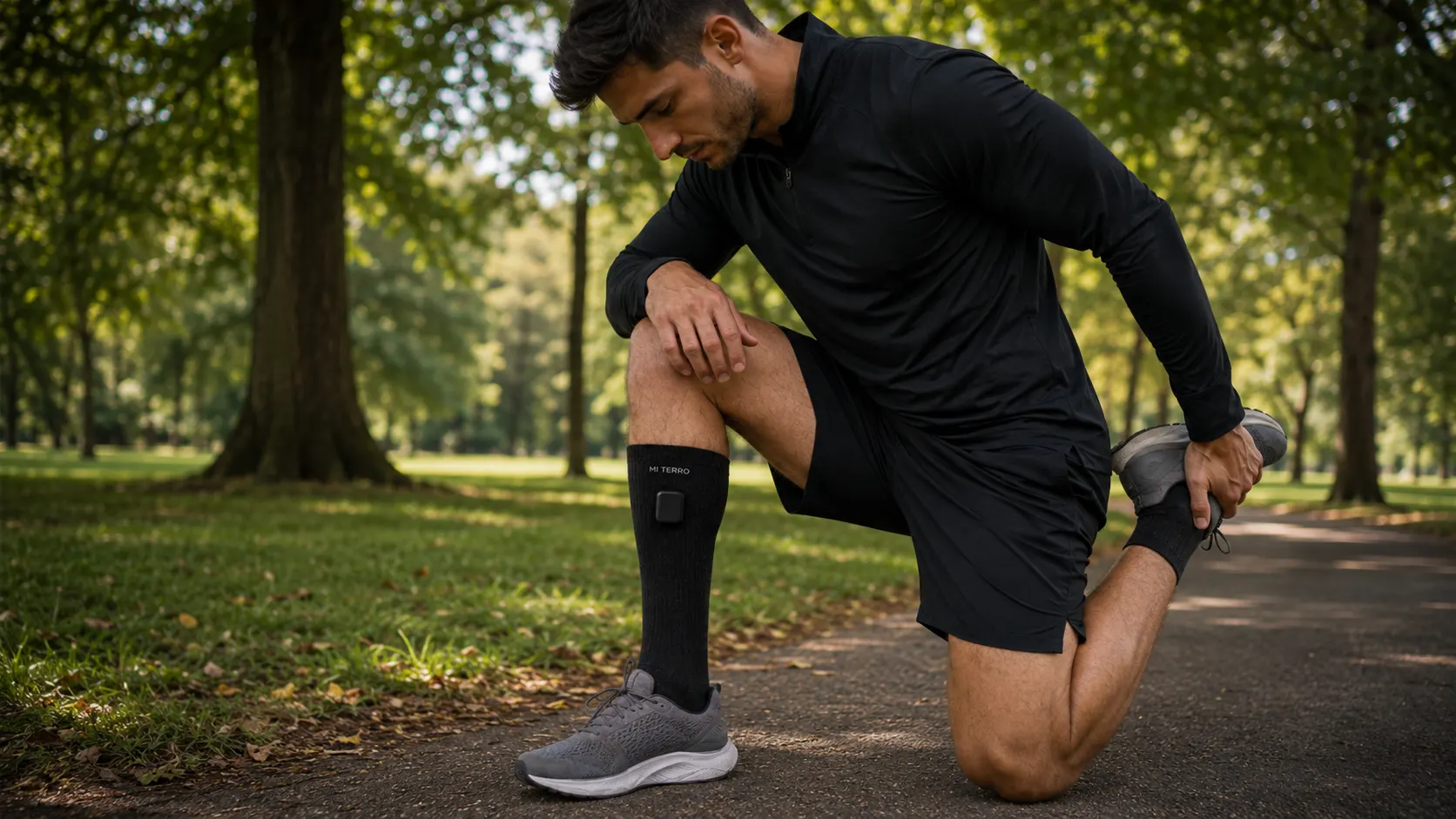
Because load is one part of this problem, useful context can include where pressure concentrates under the foot, whether one side is taking more than the other, and how that changes as activity increases. Mi Terro Care Socks are designed to capture pressure patterns at the sole.
Frequently asked questions
Is plantar fasciitis an inflammation?
Despite the "-itis" name, histological studies show it is primarily a degenerative change in the fascia rather than a classic inflammatory process. "Plantar fasciopathy" is the more accurate term.
Why is the pain worst in the first steps of the morning?
The fascia shortens and stiffens overnight. The first loading of the day stretches it abruptly, which is provocative. Pain that eases after a few minutes of walking is a hallmark of the condition.
Does stretching alone fix it?
Stretching helps symptoms but rarely resolves the problem on its own. Progressive loading of the fascia and calf, combined with reduced aggravating load, has better evidence.
Sources and further reading
- AAOS: Plantar FasciitisSymptoms, common contributors, and treatment overview.
- AAOS Foot and Ankle Conditioning ProgramGeneral conditioning guidance after injury or surgery.
- NIOSH: Prolonged Standing at WorkReview of leg swelling, discomfort, fatigue, and workplace interventions.
See your own foot-level patterns.
Mi Terro is designed to track temperature, pressure, gait, and activity trends during daily wear. It supports awareness, not diagnosis.
Try Smart Socks NowMedical disclaimer: This article is general educational information, not medical advice. Mi Terro Smart Socks are not intended to diagnose, treat, cure, or prevent disease. Contact a qualified healthcare professional about symptoms, open wounds, sudden swelling, spreading redness, or other urgent concerns.