
Gait Changes Associated With Fall Risk in Older Adults
Key takeaways
- Reduced walking speed, shorter step length, increased variability between steps, and increased time spent with both feet on the ground are all associated with higher fall risk.
- Progressive strength and balance exercise has the strongest evidence base. Medication review and home hazard reduction also contribute meaningfully.
- Consistency between steps reflects reliable motor control. Increasing step-to-step variability suggests the control system is struggling, and it is associated with elevated fall risk.
Falls are rarely random
A fall usually looks like a sudden event, but the loss of the capacity that would have prevented it is gradual. Strength declines. Balance reactions slow. Gait becomes more cautious and less stable. Then a rug, a kerb, or a dark hallway converts that accumulated fragility into an injury.
The gradual part is where the opportunity is.
The gait signature of rising risk
- Walking speed slows. Gait speed is one of the most robust single predictors of adverse outcomes in older adults.
- Step length shortens.
- Double-support time increases — that is, more of the gait cycle is spent with both feet on the ground, which is a stability-seeking strategy.
- Step-to-step variability rises. Steps become less alike.
- Asymmetry appears between left and right.
These changes are subtle by nature. A person does not notice their step length shortening by a few centimetres, and a family member usually does not either until something more dramatic happens.
What actually reduces fall risk
The evidence here is clear and worth stating plainly, because a lot of marketing in this space is not.
- Progressive strength and balance training. This has the strongest evidence of any single intervention. It needs to be challenging and sustained; a gentle weekly class is unlikely to be sufficient.
- Medication review. Sedatives, some antidepressants, blood pressure medication and polypharmacy in general are associated with falls. A pharmacist or GP review is high-yield.
- Vision check. Uncorrected vision and multifocal lenses on stairs are both risk factors.
- Home hazards. Loose rugs, poor lighting, no stair rail, clutter in walkways.
- Foot problems and footwear. Painful feet and unsupportive or ill-fitting shoes change how people walk.
- Vitamin D and bone health where indicated, to reduce the consequence of a fall.
The monitoring gap
Fall risk is typically assessed in a clinic, once, during a short walk across a room. That is a snapshot of a person on a good day in a good environment, and it can miss the gradual drift that matters.
Continuous, in-home gait data changes the picture: instead of one assessment a year, you have a trend line. A slow decline in walking speed or a rise in step variability becomes visible while there is still time to intervene with strength and balance work.
What a sensing sock adds — and what it does not
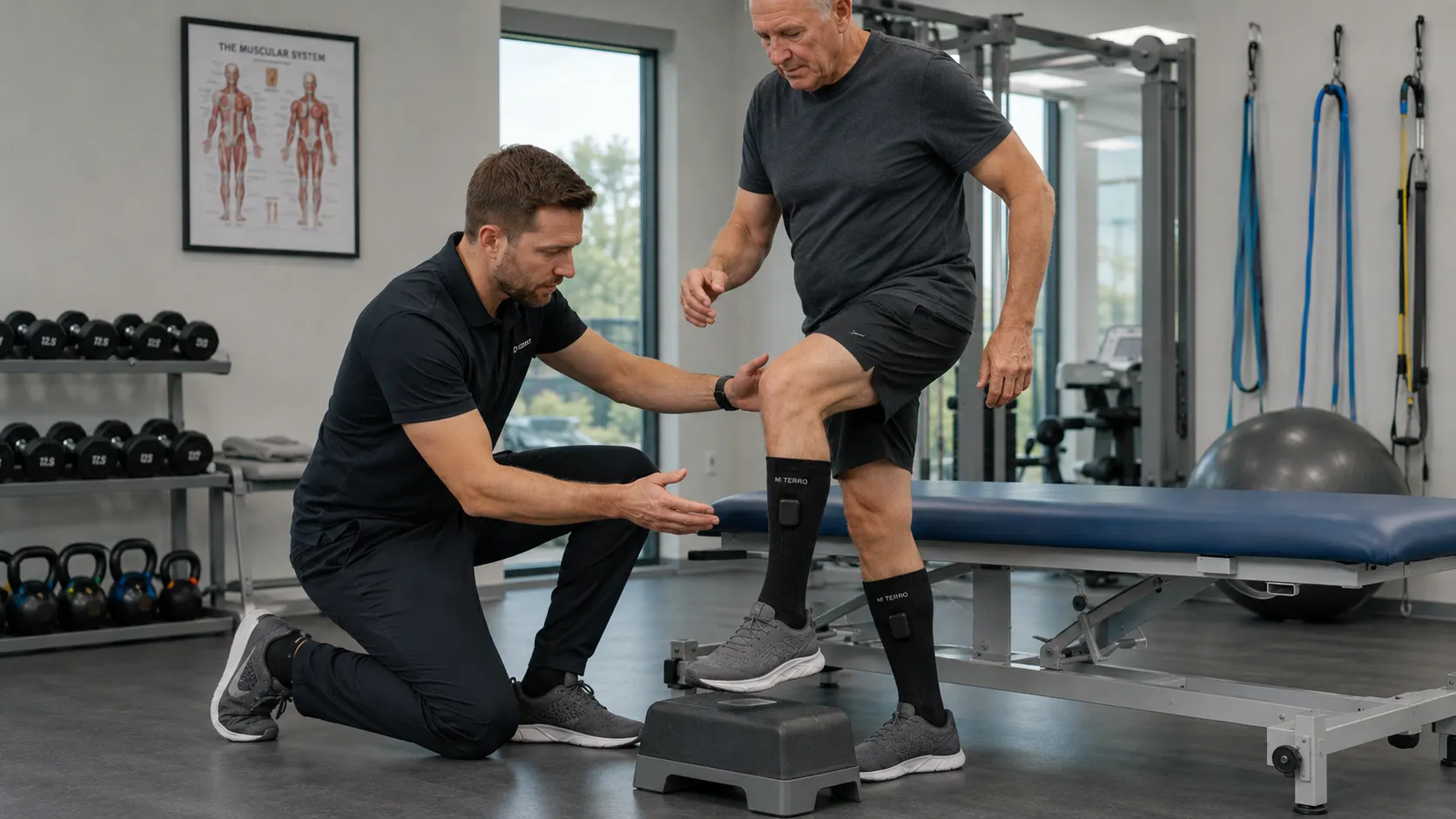
Mi Terro Care Socks are designed to capture gait timing, symmetry, activity, and load patterns during normal daily wear so trends can be reviewed by the wearer and shared with permission.
To be direct about the limits: no sock prevents a fall. A persistent gait change can be a reason to review medications, vision, strength, balance, footwear, and other risk factors with a qualified professional.
Frequently asked questions
What gait changes predict falls?
Reduced walking speed, shorter step length, increased variability between steps, and increased time spent with both feet on the ground are all associated with higher fall risk.
What is the single most effective fall prevention intervention?
Progressive strength and balance exercise has the strongest evidence base. Medication review and home hazard reduction also contribute meaningfully.
Why is gait variability important?
Consistency between steps reflects reliable motor control. Increasing step-to-step variability suggests the control system is struggling, and it is associated with elevated fall risk.
Sources and further reading
- CDC: Older Adult Falls DataCurrent U.S. fall prevalence and injury burden.
- CDC: Preventing Falls and Hip FracturesStrength, balance, medication review, and professional risk assessment.
- Umbrella Review of Gait, Balance, and Fall PredictionReview of validated gait, balance, and mobility instruments.
- Prospective Study of Gait Variability and FallsOne-year prospective study of stride-to-stride gait variability and falls.
See your own foot-level patterns.
Mi Terro is designed to track temperature, pressure, gait, and activity trends during daily wear. It supports awareness, not diagnosis.
Try Smart Socks NowMedical disclaimer: This article is general educational information, not medical advice. Mi Terro Smart Socks are not intended to diagnose, treat, cure, or prevent disease. Contact a qualified healthcare professional about symptoms, open wounds, sudden swelling, spreading redness, or other urgent concerns.