
Plantar Pressure Mapping: What Those Heat Maps Actually Mean
Key takeaways
- Plantar pressure is force divided by the area over which it acts, measured at the sole of the foot. High pressure means a lot of force concentrated into a small area.
- Elevated peak plantar pressure is an established risk factor for diabetic foot ulceration. Tissue fails where pressure concentrates and is repeated.
- No. It is a measurement. It shows where load concentrates; interpreting what that means clinically requires a trained assessor and the rest of the picture.
Pressure, not force
The distinction matters. Force is how hard you push on the ground. Pressure is that force divided by the area it is spread across. The same body weight spread across the whole sole produces modest pressure; concentrated under a single metatarsal head, it produces a great deal.
Tissue does not fail because of force. It fails because of pressure, applied repeatedly.
Reading a pressure map
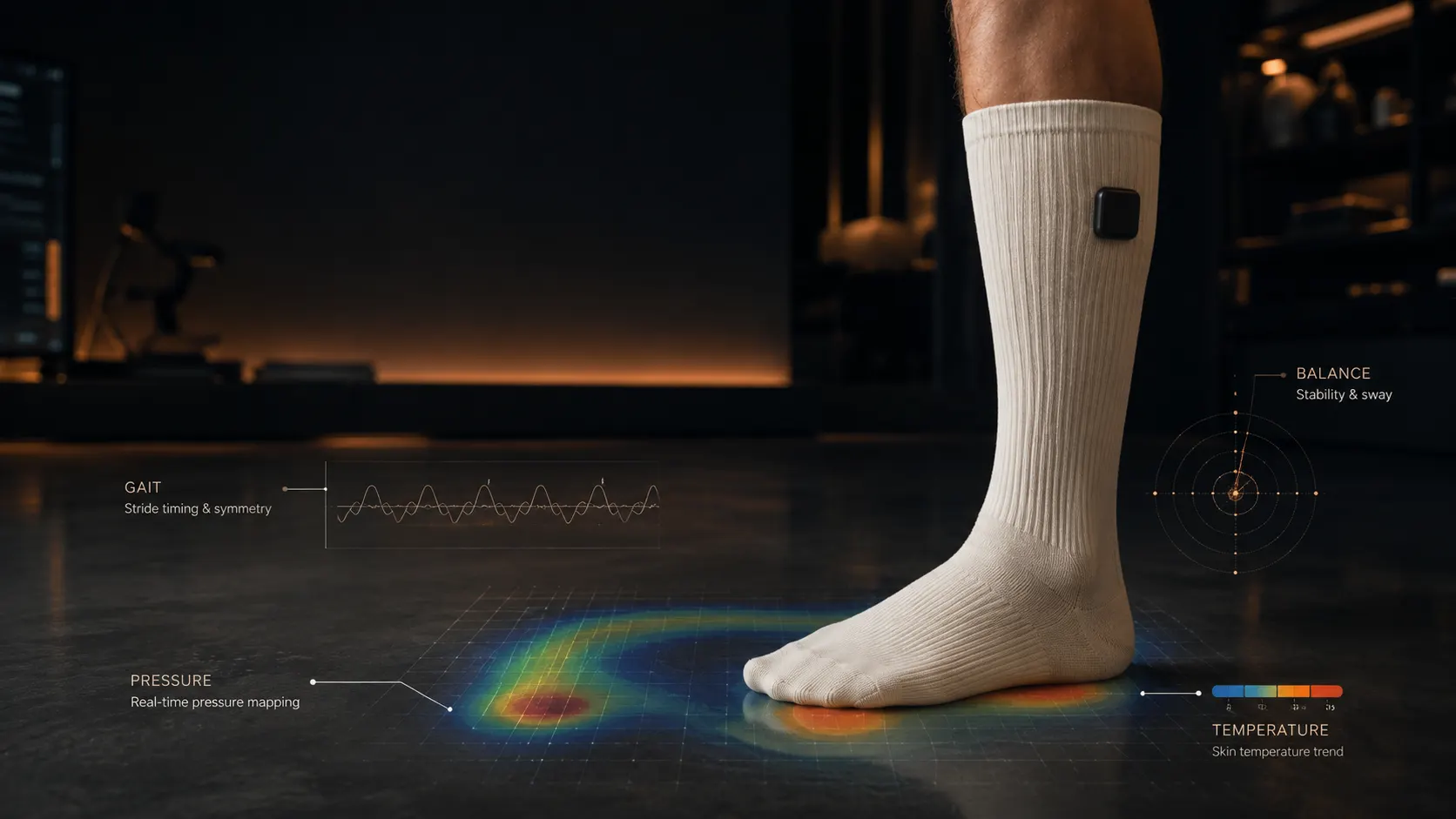
A plantar pressure map is usually shown as a heat map over a foot outline: cool colours for low pressure, hot colours for high. The regions typically reported are the heel, the midfoot, the metatarsal heads, and the toes.
Things worth looking at:
- Where the peak is. A single hot region under one metatarsal head is a concentration point.
- How symmetric the two feet are. Large asymmetry between left and right is worth explaining.
- Whether the load moves properly through the foot from heel strike to toe-off, or gets stuck.
- Whether high pressure coincides with a callus. Callus forms where pressure concentrates, and callus itself further increases pressure — a vicious loop.
Why this matters in diabetes
Elevated peak plantar pressure is a well-documented risk factor for diabetic foot ulceration, particularly when combined with loss of protective sensation. The combination is the dangerous one: high pressure concentrated in one spot, and no pain to make you avoid it.
This is why offloading — through footwear, insoles, or a removable boot — is central to both preventing and healing diabetic foot ulcers. You are directly manipulating the variable that causes the damage.
Why it matters in sport
In running, pressure distribution reflects how force is being managed at contact. Concentration of load in one region, or a marked asymmetry that develops as fatigue sets in, is information about how the tissue is being stressed.
Mat versus in-shoe versus in-sock
- Pressure mats measure a few steps in a lab or clinic, at high resolution. Excellent detail, tiny sample of your life.
- In-shoe insoles measure during real walking, but only in the shoe they are in.
- Sensing socks measure wherever you go, including barefoot indoors, which is where a great deal of high-risk loading actually happens.
They are complementary. A clinic mat gives a high-resolution snapshot; a sensing sock is designed to add lower-friction measurements during ordinary wear. The right tool depends on the question.
Frequently asked questions
What is plantar pressure?
Plantar pressure is force divided by the area over which it acts, measured at the sole of the foot. High pressure means a lot of force concentrated into a small area.
Why does peak pressure matter?
Elevated peak plantar pressure is an established risk factor for diabetic foot ulceration. Tissue fails where pressure concentrates and is repeated.
Is a pressure map a diagnosis?
No. It is a measurement. It shows where load concentrates; interpreting what that means clinically requires a trained assessor and the rest of the picture.
Sources and further reading
- IWGDF 2023 Prevention GuidelineInternational guidance for prevention and risk-based care of diabetes-related foot disease.
- Review of Textile-Based Pressure SensorsFlexible textile pressure-sensor structures, applications, and limitations.
- Systematic Review of Running Overuse BiomechanicsInjury-specific evidence, conflicting findings, and research limitations.
See your own foot-level patterns.
Mi Terro is designed to track temperature, pressure, gait, and activity trends during daily wear. It supports awareness, not diagnosis.
Try Smart Socks NowMedical disclaimer: This article is general educational information, not medical advice. Mi Terro Smart Socks are not intended to diagnose, treat, cure, or prevent disease. Contact a qualified healthcare professional about symptoms, open wounds, sudden swelling, spreading redness, or other urgent concerns.