
Charcot Foot: Why a Hot, Swollen Foot Needs Urgent Assessment
Key takeaways
- A unilaterally hot, swollen, red foot in someone with neuropathy — often with disproportionately little pain, and frequently with no memory of an injury.
- Yes. Active Charcot neuroarthropathy can lead to irreversible bone and joint destruction. It requires urgent specialist assessment and immobilisation.
- A temperature difference of several degrees between the affected and unaffected foot is characteristic, and serial temperature measurement is used clinically to monitor whether the process is settling.
A destructive process with almost no pain
Charcot neuroarthropathy is a condition in which bones and joints in a neuropathic foot fragment and dislocate, sometimes progressing to a collapse of the arch that permanently changes the shape of the foot. It can happen over a matter of weeks.
What makes it so dangerous is the mismatch between the severity of what is happening inside the foot and how little it hurts. Because the nerves are damaged, the person often keeps walking on a foot that is actively disintegrating.
The presentation
- One foot that is hot, swollen, and often red.
- Usually no wound and often no remembered injury.
- Pain that is present but far milder than the appearance would suggest — or absent.
- The person is usually still walking on it.
It is commonly mistaken for cellulitis, gout, or a sprain. The differentiator that matters most is the context: a hot, swollen foot in a person with diabetic neuropathy should be treated as Charcot until a specialist has proven otherwise.
Why temperature is central
The temperature difference between the affected foot and the unaffected one is one of the key clinical signs, and serial temperature measurement is used to track whether the active phase is resolving. As the process settles under immobilisation, the temperature difference narrows.
This makes Charcot one of the clearest examples of why foot temperature is worth measuring at all: the signal is large, it is asymmetric, and it precedes the visible deformity.
What to do
- If you have neuropathy and one foot becomes hot and swollen, stop weight-bearing on it and seek specialist assessment urgently — the same day if possible.
That is the whole message. The treatment for active Charcot is immobilisation and offloading, and the outcome depends heavily on how quickly it starts. Every week of continued walking on an active Charcot foot risks permanent deformity, which in turn creates the pressure points that cause future ulcers.
Where monitoring fits
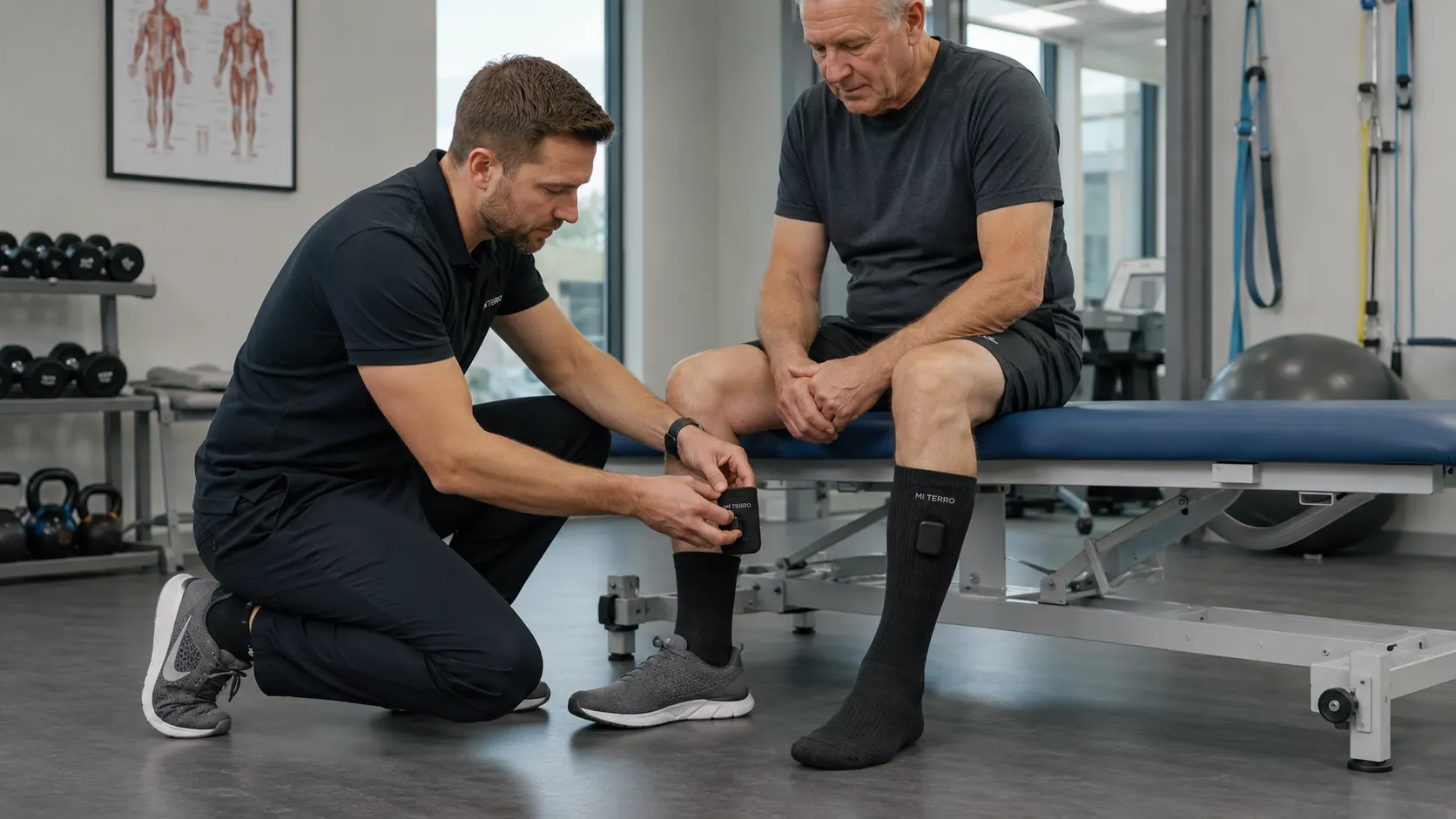
A bilateral temperature system may make a sustained left-to-right difference easier to notice. Mi Terro Care Socks are not a diagnostic device and cannot identify Charcot. A hot, swollen foot in a person with neuropathy requires prompt professional assessment regardless of any wearable reading.
Frequently asked questions
What is the earliest sign of Charcot foot?
A unilaterally hot, swollen, red foot in someone with neuropathy — often with disproportionately little pain, and frequently with no memory of an injury.
Is Charcot foot an emergency?
Yes. Active Charcot neuroarthropathy can lead to irreversible bone and joint destruction. It requires urgent specialist assessment and immobilisation.
How much hotter is a Charcot foot?
A temperature difference of several degrees between the affected and unaffected foot is characteristic, and serial temperature measurement is used clinically to monitor whether the process is settling.
Sources and further reading
- NIDDK: Diabetes and Foot ProblemsDaily foot care, temperature concerns, footwear, and when to contact a clinician.
- IWGDF 2023 Prevention GuidelineInternational guidance for prevention and risk-based care of diabetes-related foot disease.
- NIDDK: Peripheral NeuropathySymptoms, balance effects, examinations, and daily foot care.
See your own foot-level patterns.
Mi Terro is designed to track temperature, pressure, gait, and activity trends during daily wear. It supports awareness, not diagnosis.
Try Smart Socks NowMedical disclaimer: This article is general educational information, not medical advice. Mi Terro Smart Socks are not intended to diagnose, treat, cure, or prevent disease. Contact a qualified healthcare professional about symptoms, open wounds, sudden swelling, spreading redness, or other urgent concerns.