
Peripheral Neuropathy: Why Lost Sensation Increases Foot Risk
Key takeaways
- It is the point at which a foot can no longer feel the pressure or pain that would normally make you shift your weight or stop walking. It is typically tested with a 10g monofilament pressed against several sites on the sole.
- Established nerve damage is generally not reversible, but progression can be slowed. Glycaemic control is the primary lever, and it is why early detection matters.
- Because it removes the pain feedback that would otherwise stop you from repeatedly loading a damaged area. The person keeps walking on the failing tissue because nothing hurts.
Pain is a protective system
Under normal circumstances, a stone in your shoe becomes intolerable within a few steps. You stop, you remove it, and no damage is done. That entire sequence depends on nociception — the ability to detect a noxious stimulus — and it runs without conscious effort.
Diabetic peripheral neuropathy degrades this system. Chronically elevated blood glucose damages peripheral nerves, typically starting in the longest ones, which is why it appears in the feet first and progresses upward in a "stocking" distribution.
What it feels like — and what it does not
Neuropathy is not simply numbness. It commonly presents as a mixture of positive and negative symptoms:
- Burning, tingling, or electric-shock sensations, often worse at night.
- Pins and needles.
- Numbness, or a feeling of walking on cotton wool or thick socks.
- Reduced ability to feel temperature, so hot water or a hot car floor becomes a burn risk.
- Loss of the sense of where the foot is in space, which affects balance.
The dangerous phase is often the quiet one. Painful neuropathy at least announces itself. Once the pain fades into numbness, people frequently assume the problem has resolved. It has not; the nerve has simply stopped reporting.
The monofilament test
The standard clinical screen is a 10g Semmes-Weinstein monofilament: a calibrated nylon filament pressed against defined sites on the sole until it buckles. If you cannot feel the filament at those sites, you have lost protective sensation, and your risk of foot ulceration rises substantially.
This test is simple, quick, and should be part of an annual diabetic foot review. If you have diabetes and have not had your feet checked this way, ask.
The consequence chain
- Nerve damage removes protective pain.
- Repetitive pressure on one area goes uncorrected because nothing hurts.
- Inflammation develops; local skin temperature rises.
- Tissue breaks down under intact skin.
- The skin opens, and now there is an ulcer with a route for infection.
Every step in that chain is silent in a neuropathic foot. This is precisely why an objective, external signal matters so much: something has to notice what the nerves no longer report.
What to do
- Get glycaemic control as good as it can reasonably be. This is the main lever on progression.
- Inspect your feet daily, visually, because you cannot rely on feeling a problem.
- Never test bathwater with your feet. Use your hand or a thermometer.
- Never walk barefoot, including indoors.
- Have a professional foot exam at the interval your care team advises.
- Consider objective monitoring — such as continuous temperature sensing — as a way of replacing the alarm system that neuropathy has switched off.
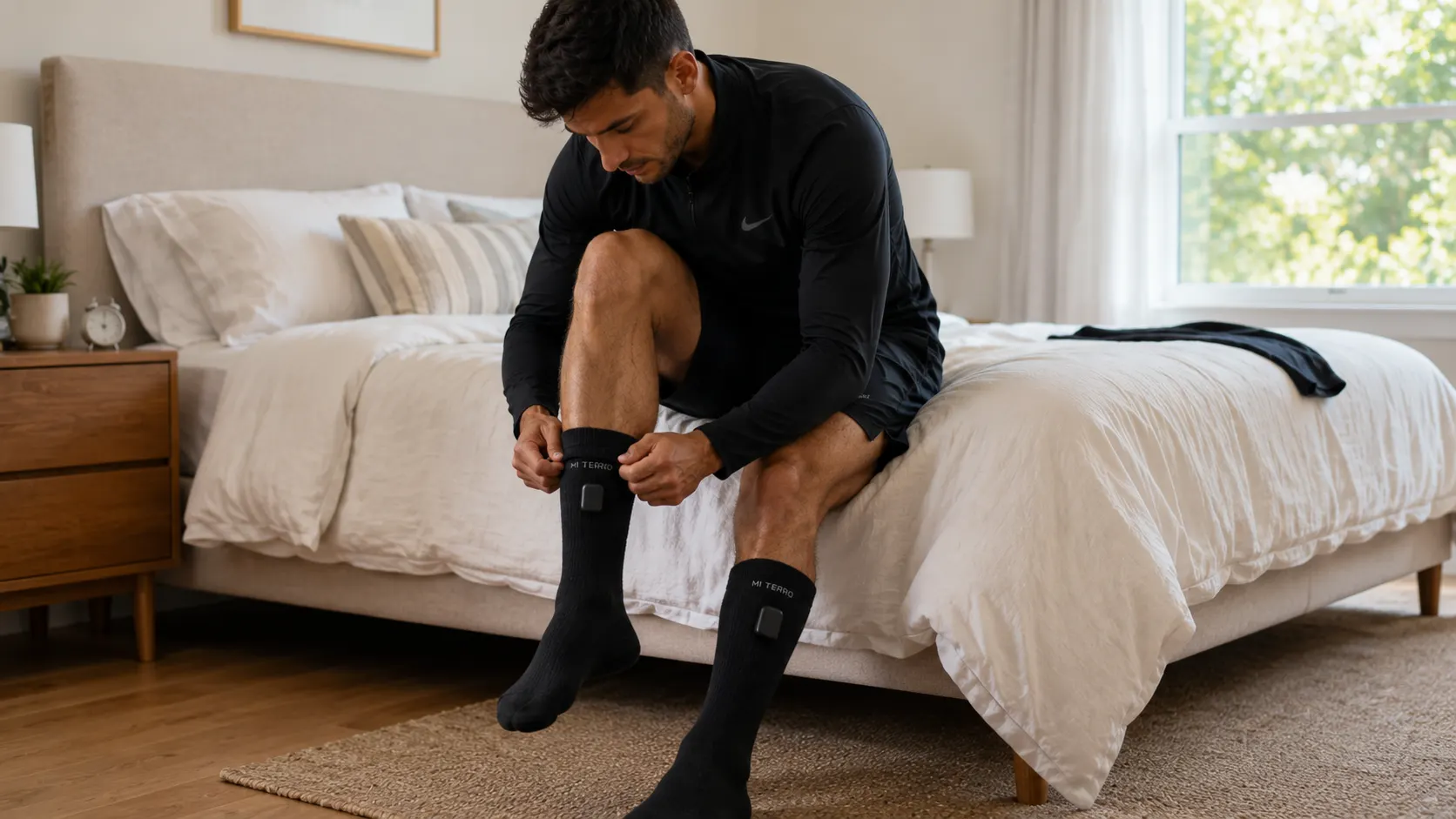
Mi Terro Care Socks are designed to add measurable foot-level context when sensation alone may not provide a complete picture.
Frequently asked questions
What is loss of protective sensation?
It is the point at which a foot can no longer feel the pressure or pain that would normally make you shift your weight or stop walking. It is typically tested with a 10g monofilament pressed against several sites on the sole.
Is diabetic neuropathy reversible?
Established nerve damage is generally not reversible, but progression can be slowed. Glycaemic control is the primary lever, and it is why early detection matters.
Why does neuropathy cause ulcers?
Because it removes the pain feedback that would otherwise stop you from repeatedly loading a damaged area. The person keeps walking on the failing tissue because nothing hurts.
Sources and further reading
- NIDDK: Peripheral NeuropathySymptoms, balance effects, examinations, and daily foot care.
- CDC: Your Feet and DiabetesDaily foot checks, neuropathy, and early attention to foot problems.
See your own foot-level patterns.
Mi Terro is designed to track temperature, pressure, gait, and activity trends during daily wear. It supports awareness, not diagnosis.
Try Smart Socks NowMedical disclaimer: This article is general educational information, not medical advice. Mi Terro Smart Socks are not intended to diagnose, treat, cure, or prevent disease. Contact a qualified healthcare professional about symptoms, open wounds, sudden swelling, spreading redness, or other urgent concerns.