
Foot Temperature Monitoring for Diabetes: What the Evidence Actually Says
Key takeaways
- A difference of about 2.2°C (4°F) between the same anatomical spot on the left and right foot, repeated on two consecutive days, is the threshold most commonly used in clinical trials.
- Daily. The value of thermometry comes from catching a change early, which requires a consistent baseline and consistent measurement.
- No. It supplements them. Thermometry catches inflammation between appointments; a clinician still needs to examine the foot, assess circulation, and debride callus.
Why temperature, of all things
Inflammation is the body preparing tissue for repair, and it raises local blood flow. More blood flow means more heat. In a foot with intact sensation, this process is accompanied by pain, and the pain makes you limp, shift your weight, or stop walking. In a foot with neuropathy, the heat is there but the pain is not.
Temperature is therefore a proxy for the warning signal that neuropathy has taken away.
The 2.2°C threshold, and where it comes from
The number that appears throughout the clinical literature is a 2.2°C (4°F) difference between contralateral sites — that is, the same point on the opposite foot. The comparison is what matters. Your feet are your own control group: a foot that is 2°C warmer than the room tells you nothing, but a foot that is 2.2°C warmer than its twin tells you a lot.
Lavery and colleagues ran randomised controlled trials in high-risk diabetic patients using exactly this approach: measure six sites on each foot daily with an infrared thermometer, and if the left-right difference exceeds the threshold on two consecutive days, reduce walking until the temperatures re-equalise and contact the clinic.
The results were consistent across trials: the monitoring groups had markedly fewer ulcers than the standard-care groups. The effect was large enough that thermometry now appears in international diabetic foot guidance as a recommended option for high-risk patients.
What "high risk" means here
The evidence is strongest for people who have at least one of the following:
- A previous diabetic foot ulcer.
- A previous amputation.
- Diagnosed peripheral neuropathy with loss of protective sensation.
- Foot deformity such as claw toes, bunions, or Charcot changes.
If you have diabetes but full sensation, no deformity, and no ulcer history, your absolute risk is much lower and the case for daily thermometry is weaker. Ask your care team where you sit.
The practical problem with handheld thermometry
Spot-check thermometry works, but it asks a lot: measure six points per foot, every single day, in the same places, and log them. Adherence in the real world drops over months. People travel. People get busy. People feel fine — which is precisely the problem, because a neuropathic foot always feels fine.
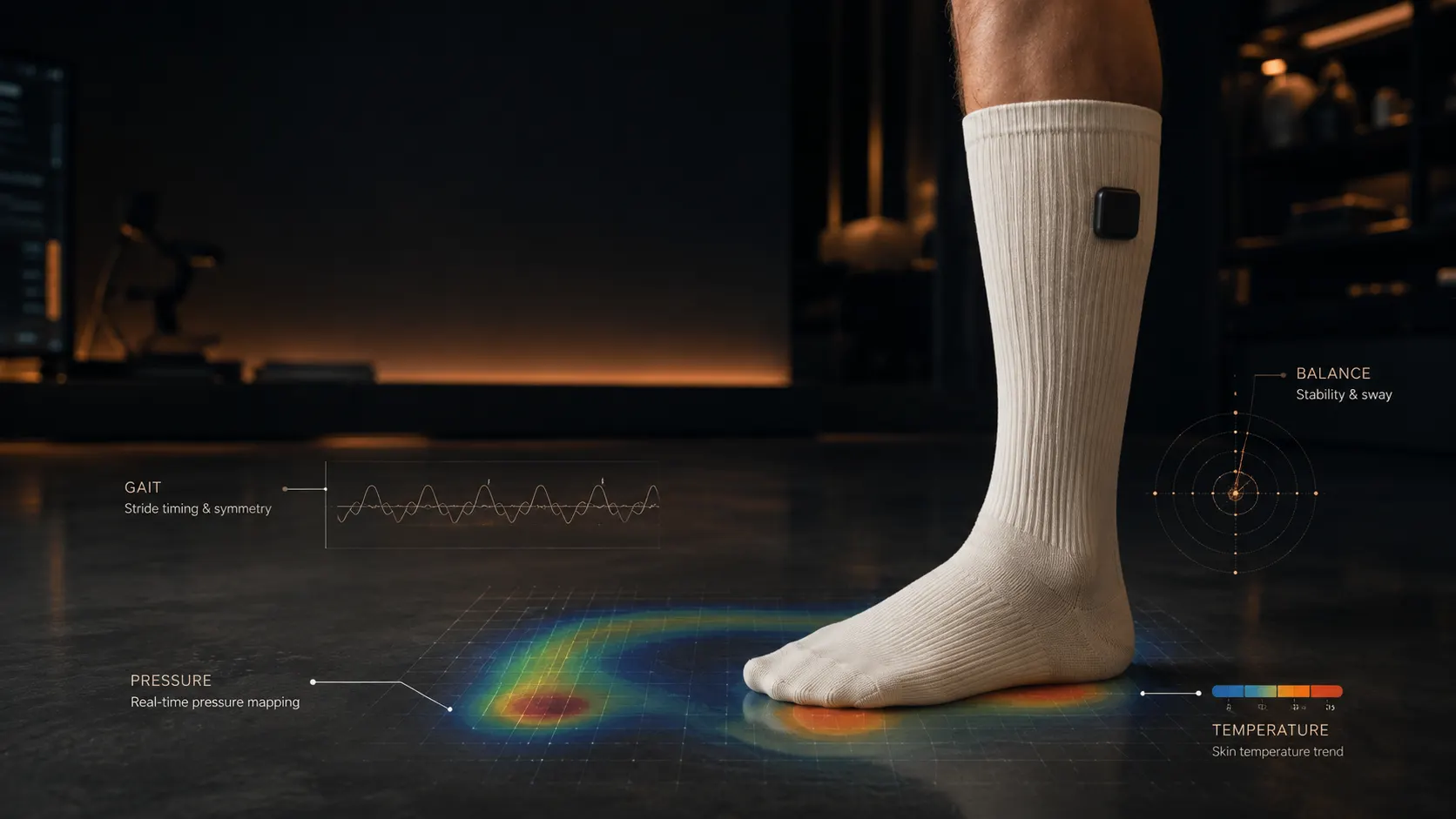
Continuous textile sensing is one possible way to add temperature context between manual checks. Its usefulness depends on sensor placement, calibration, adherence, and a clear response plan.
How to act on a hot spot
- Confirm it. A single reading can be an artefact of a warm room, a tight shoe, or recent walking. Look for a difference that persists.
- Offload it. Reduce walking, and if you have prescribed offloading footwear or a removable boot, use it.
- Inspect the skin over the hot area for callus, redness, or a blister.
- Contact your podiatry or diabetes foot team. A hot spot that has not resolved after a couple of days of offloading needs eyes on it.
Mi Terro Care Socks are designed to track temperature patterns during wear, but decisions still belong with you and a qualified clinician. Thermometry can indicate where to look; it does not diagnose the cause.
Frequently asked questions
What temperature difference indicates a problem?
A difference of about 2.2°C (4°F) between the same anatomical spot on the left and right foot, repeated on two consecutive days, is the threshold most commonly used in clinical trials.
How often should foot temperature be measured?
Daily. The value of thermometry comes from catching a change early, which requires a consistent baseline and consistent measurement.
Does temperature monitoring replace foot exams?
No. It supplements them. Thermometry catches inflammation between appointments; a clinician still needs to examine the foot, assess circulation, and debride callus.
Sources and further reading
- IWGDF 2023 Prevention GuidelineInternational guidance for prevention and risk-based care of diabetes-related foot disease.
- Armstrong et al. Foot Temperature TrialRandomized study of temperature monitoring in high-risk participants with diabetes.
- DIATEMP Multicenter Randomized TrialAt-home temperature monitoring results, limitations, and the importance of activity reduction after hotspots.
- Systematic Review of At-Home Foot Temperature MonitoringMeta-analysis of randomized trials and the 2.2 C hotspot protocol.
See your own foot-level patterns.
Mi Terro is designed to track temperature, pressure, gait, and activity trends during daily wear. It supports awareness, not diagnosis.
Try Smart Socks NowMedical disclaimer: This article is general educational information, not medical advice. Mi Terro Smart Socks are not intended to diagnose, treat, cure, or prevent disease. Contact a qualified healthcare professional about symptoms, open wounds, sudden swelling, spreading redness, or other urgent concerns.