
Walking Speed: A Useful Mobility Marker
Key takeaways
- Because it integrates the function of many systems at once — cardiovascular, neurological, musculoskeletal — and it has been shown to predict important outcomes including mortality and disability in older adults.
- Thresholds vary by study, but slower usual gait speed is consistently associated with worse outcomes, and a decline in an individual over time is meaningful regardless of the absolute value.
- Yes. Progressive strength and balance training improves gait speed in older adults, which is one reason measuring it is worthwhile.
A single number that reflects almost everything
Walking requires the cardiovascular system to deliver oxygen, the nervous system to coordinate the movement, the musculoskeletal system to produce and absorb force, and the balance system to keep you upright. It is not a leg activity; it is a whole-organism activity.
Which is why it turns out that how fast someone habitually walks carries a remarkable amount of information about their overall physiological state. Gait speed has been studied extensively in older adults and shows consistent associations with survival, disability, hospitalisation and cognitive decline.
The measurement problem
Despite being cheap, non-invasive and predictive, walking speed is almost never tracked. When it is measured at all, it is measured once, in a corridor, in a clinic, on a day when the person made an effort to attend an appointment.
That is a poor sample. People walk faster when they know they are being timed. They walk faster in a familiar, well-lit corridor than at home at night. And a single reading tells you nothing about the direction of travel, which is the part that matters.
The trend is the signal
A single gait speed value tells you roughly where someone sits. A gait speed trend tells you what is happening to them. A person whose usual walking speed has declined steadily over six months is telling you something important, even if their current value would still look acceptable on a chart.
Decline is the actionable signal, because decline is often reversible with strength and balance training — and because it typically precedes the falls, the hospital admission, and the loss of independence.
What to do with the information
- Treat a decline in habitual walking speed as a prompt for assessment rather than a diagnosis.
- Look for the reversible contributors: new medication, pain, a foot problem, low mood, deconditioning after an illness.
- Start progressive strength and balance work. This is the intervention with the best evidence for improving gait speed and reducing falls.
- Recheck. If the trend turns around, it was working.
Measuring it continuously
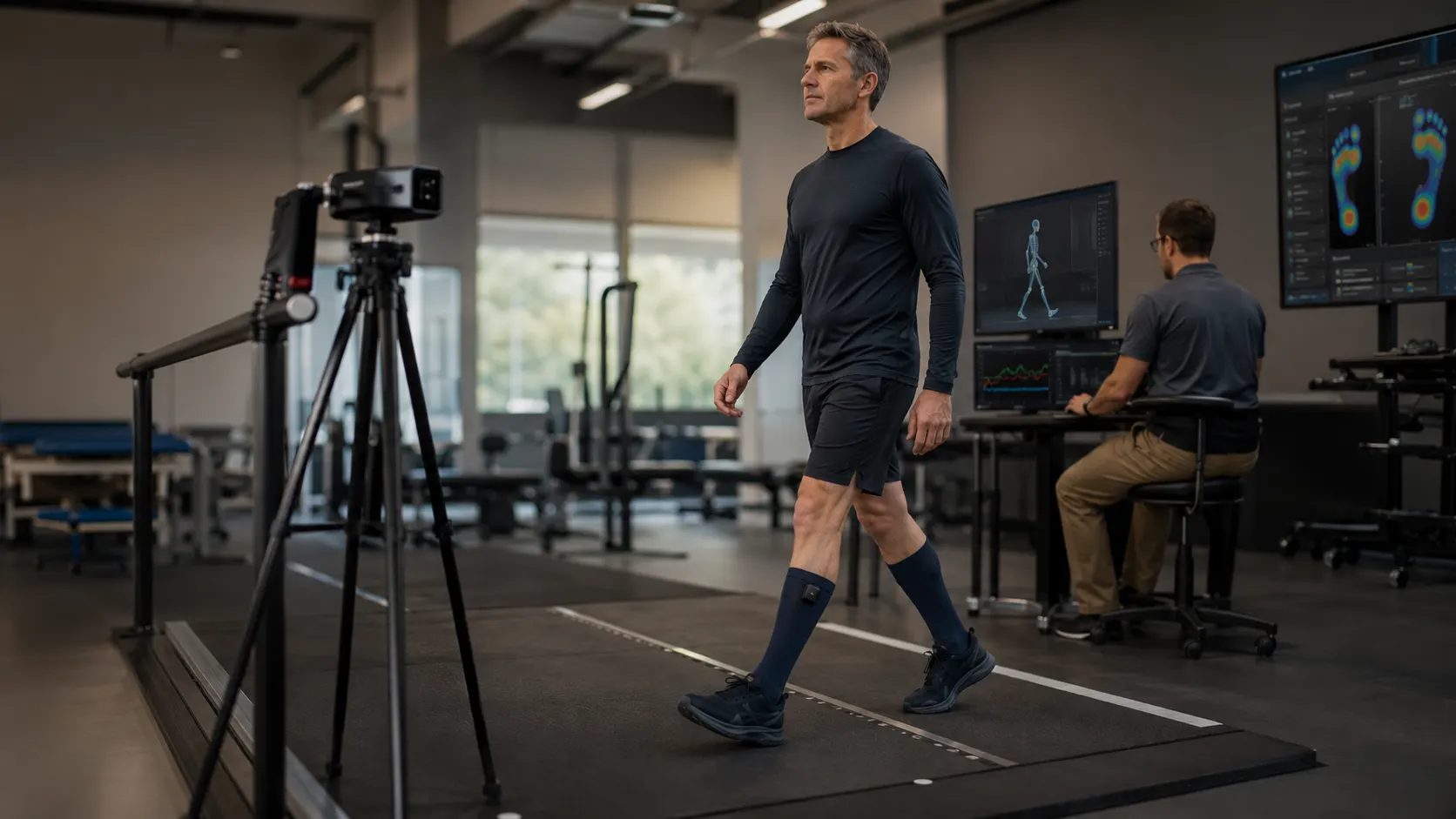
A sensor at the foot can measure gait during ordinary life rather than only during a supervised test. Mi Terro Care Socks are designed to make a personal gait trend easier to review alongside clinical assessment.
Frequently asked questions
Why is walking speed considered a vital sign?
Because it integrates the function of many systems at once — cardiovascular, neurological, musculoskeletal — and it has been shown to predict important outcomes including mortality and disability in older adults.
What is a concerning walking speed?
Thresholds vary by study, but slower usual gait speed is consistently associated with worse outcomes, and a decline in an individual over time is meaningful regardless of the absolute value.
Can walking speed be improved?
Yes. Progressive strength and balance training improves gait speed in older adults, which is one reason measuring it is worthwhile.
Sources and further reading
- Gait Speed and Survival in Older AdultsPooled cohort analysis of gait speed and survival in older adults.
- Umbrella Review of Gait, Balance, and Fall PredictionReview of validated gait, balance, and mobility instruments.
- CDC: Preventing Falls and Hip FracturesStrength, balance, medication review, and professional risk assessment.
See your own foot-level patterns.
Mi Terro is designed to track temperature, pressure, gait, and activity trends during daily wear. It supports awareness, not diagnosis.
Try Smart Socks NowMedical disclaimer: This article is general educational information, not medical advice. Mi Terro Smart Socks are not intended to diagnose, treat, cure, or prevent disease. Contact a qualified healthcare professional about symptoms, open wounds, sudden swelling, spreading redness, or other urgent concerns.