
Foot Health When You Stand All Day
Key takeaways
- Prolonged static standing concentrates load on the same tissue for hours without the load-shifting that walking provides, and it impairs venous return, causing swelling and aching.
- Cushioning helps but is not the whole answer. Movement, load variation, and calf muscle activity matter as much as the surface underfoot.
- For the feet and circulation, prolonged static standing is often harder than walking, because walking cycles load between the two feet and drives the calf muscle pump.
Standing is not resting
Standing still for hours is a genuine physiological load. There is a widespread assumption that walking is exertion and standing is not, but for the feet and the venous system the reverse can be true.
When you walk, load alternates between feet, tissue gets brief periods of unloading, and each calf contraction pumps blood back toward the heart. When you stand still, none of that happens. The same structures take continuous load, and blood pools.
What this produces
- Aching and burning in the sole, often worst in the arch and heel.
- Swelling in the feet and ankles by the end of a shift.
- Plantar fasciopathy, driven by sustained load on the fascia.
- Metatarsalgia — pain under the ball of the foot where pressure concentrates.
- Callus formation at the pressure points, which then increases pressure further.
- Over years, a contribution to varicose veins and chronic venous problems.
What actually helps
- Move, even slightly. Shift weight, take a few steps, rock heel to toe. Any movement that cycles the load and activates the calf pump is doing real work.
- Use anti-fatigue matting where you can. It works precisely because it encourages micro-movements.
- Choose footwear with adequate cushioning and a stable, wide toe box. Cushioning is not the whole story but it is a large part of it.
- Consider graduated compression socks if swelling is a problem. They support venous return and there is reasonable evidence for symptom relief in people who stand for long periods.
- Elevate your feet after a shift. Above heart level if you can manage it.
- Strengthen the calf and intrinsic foot muscles. A stronger foot tolerates more.
- Vary the load across a shift, not just across a week.
Why pressure data is genuinely useful here
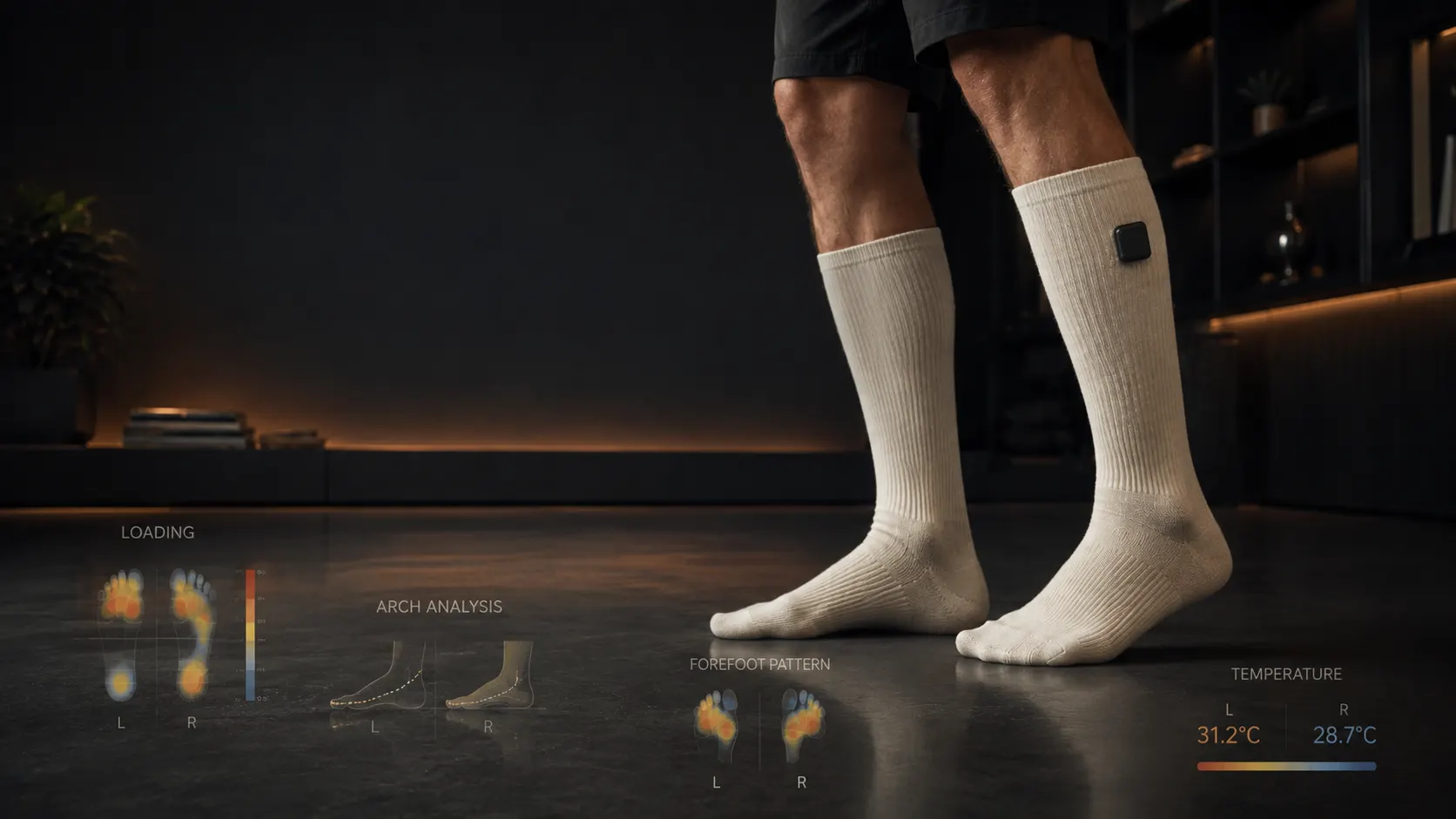
If your feet hurt after standing, the useful question is where the load is concentrating and for how long it stays there. That is exactly what plantar pressure measurement answers. It converts "my feet hurt" into "pressure is concentrating under the second and third metatarsal heads and it is not shifting for hours" — and the second version tells you what to change.
Mi Terro Care Socks are designed for daily wear so pressure and activity patterns can be reviewed across a working day rather than from a single short test.
Frequently asked questions
Why do my feet hurt after standing all day?
Prolonged static standing concentrates load on the same tissue for hours without the load-shifting that walking provides, and it impairs venous return, causing swelling and aching.
Are cushioned shoes enough?
Cushioning helps but is not the whole answer. Movement, load variation, and calf muscle activity matter as much as the surface underfoot.
Is standing worse than walking?
For the feet and circulation, prolonged static standing is often harder than walking, because walking cycles load between the two feet and drives the calf muscle pump.
Sources and further reading
- NIOSH: Prolonged Standing at WorkReview of leg swelling, discomfort, fatigue, and workplace interventions.
- AAOS: Plantar FasciitisSymptoms, common contributors, and treatment overview.
See your own foot-level patterns.
Mi Terro is designed to track temperature, pressure, gait, and activity trends during daily wear. It supports awareness, not diagnosis.
Try Smart Socks NowMedical disclaimer: This article is general educational information, not medical advice. Mi Terro Smart Socks are not intended to diagnose, treat, cure, or prevent disease. Contact a qualified healthcare professional about symptoms, open wounds, sudden swelling, spreading redness, or other urgent concerns.